You sleep eight hours and wake up exhausted. You push through the morning on caffeine and adrenaline. You crash in the afternoon — hard. You get a second wind around 10pm and cannot fall asleep until midnight or later. You are tired but wired. Exhausted but unable to fully rest.
Your blood tests are normal. Your thyroid panel is fine. Your doctor has no explanation. You have been told you are simply stressed — as if stress is a diagnosis rather than a symptom.
This pattern has a name. It is called adrenal fatigue — or more precisely, HPA axis dysregulation — and it is one of the most common and most consistently unaddressed root causes of chronic exhaustion, hormonal dysfunction, immune dysregulation, and the inability to recover from illness that I encounter in clinical practice.
This post is the framework that conventional medicine does not have — and the one that actually leads to resolution.
What the adrenal glands actually do — and why they matter for everything
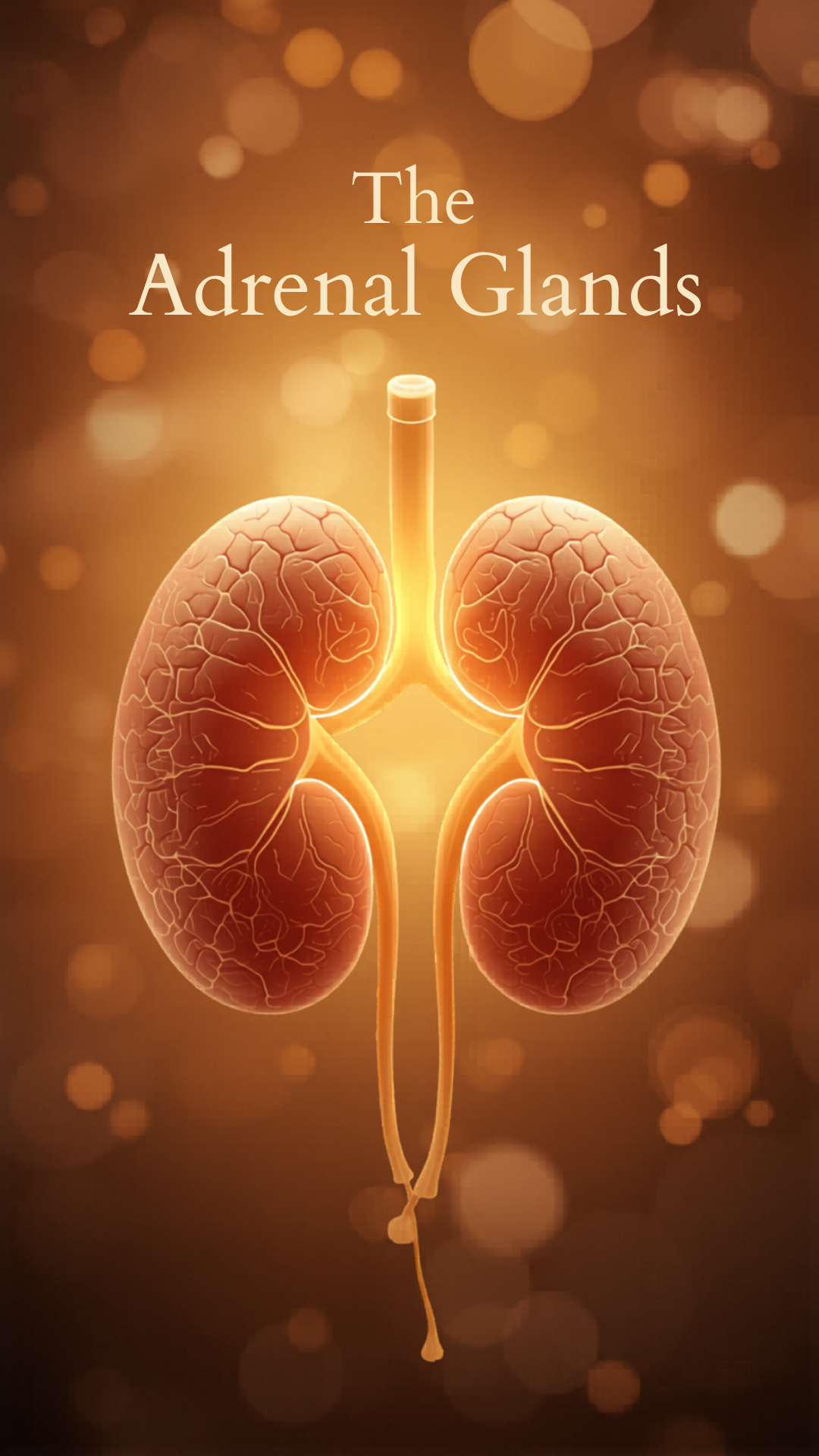
The adrenal glands are two small walnut-sized organs that sit atop the kidneys. Despite their size, they govern some of the most critical functions in the entire body — and when they are dysregulated, virtually every system in the body is affected.
The adrenal glands produce cortisol — the primary stress hormone that regulates the sleep-wake cycle, blood sugar, immune function, inflammation, blood pressure, and the body's response to physical and psychological stress. They produce adrenaline (epinephrine) and noradrenaline — the fight-or-flight hormones responsible for the acute stress response. They produce DHEA — the precursor to testosterone and oestrogen and one of the body's primary anti-ageing hormones. They produce aldosterone — which regulates sodium-potassium balance and blood pressure. And they produce a portion of the body's sex hormones — making them a critical part of the hormonal cascade that governs reproductive health, libido, and hormonal balance in both men and women.
When the adrenal glands are chronically overburdened — by persistent physical, emotional, or biochemical stressors — this entire hormonal cascade begins to fail. The result is the complex, multi-system syndrome that we call adrenal fatigue.
What adrenal fatigue actually is — the HPA axis explained

The conventional medical establishment does not officially recognise adrenal fatigue as a diagnosis. This is because the blood tests used to assess adrenal function — measuring cortisol at a single point in the day — are designed to detect Addison's disease (complete adrenal failure) and Cushing's syndrome (extreme cortisol excess). They are not designed to detect the subtler, progressive dysregulation of the HPA axis that underlies what practitioners call adrenal fatigue.
HPA axis — the hypothalamic-pituitary-adrenal axis — is the communication system between the brain and the adrenal glands. The hypothalamus detects stress and signals the pituitary, which signals the adrenal glands to produce cortisol. When stress is chronic rather than acute, this signalling system becomes dysregulated — producing the characteristic patterns of adrenal fatigue.
In the early stages of HPA axis dysregulation, cortisol is elevated — the adrenals are working overtime to meet the demands of chronic stress, producing the high-cortisol pattern associated with anxiety, insomnia, central weight gain, immune dysregulation, and the driven-but-exhausted state that so many people in modern life have normalised.
As the dysregulation progresses, cortisol output becomes erratic — high in the morning, crashing mid-afternoon, elevated again at night. This pattern produces the characteristic fatigue-energy-fatigue rhythm of adrenal fatigue: exhausted in the morning, struggling through the afternoon, wired at night.
In more advanced stages, cortisol production is globally reduced — the adrenals have been chronically overburdened and are no longer able to produce adequate cortisol for daily function. This produces the profound, debilitating exhaustion, extreme sensitivity to stress, difficulty recovering from illness, and the sense of running on empty that characterises severe adrenal fatigue.
Standard blood cortisol testing misses the majority of this progression because it captures a single snapshot rather than the 24-hour cortisol rhythm that reveals the pattern. A 24-hour salivary cortisol test — measuring cortisol at four points throughout the day — is significantly more revealing. And a quantum bioresonance scan reads adrenal function at the frequency level, identifying the specific dysregulation pattern, the underlying drivers, and the nutritional deficiencies that are impairing adrenal recovery without a single blood draw.
The symptoms of adrenal fatigue
The symptom picture of adrenal fatigue is broad because cortisol influences virtually every system in the body. The most common presentations include:
Energy and sleep:
Profound fatigue that sleep does not resolve
Difficulty waking in the morning — extreme tiredness for the first one to two hours
Energy crash in the mid-afternoon — typically between 2 and 4pm
Second wind in the evening — feeling most alert after 9pm
Insomnia or difficulty staying asleep — particularly waking between 1 and 3am
Unrefreshing sleep regardless of duration
Metabolic and hormonal:
Weight gain concentrated in the abdomen — cortisol-driven visceral fat accumulation
Difficulty losing weight despite dietary restriction and exercise
Blood sugar instability — cravings for sugar and salt, dizziness between meals
Thyroid symptoms despite normal labs — cortisol directly impairs T4 to T3 conversion
Hormonal imbalances — adrenal dysfunction drives the pregnenolone steal that depletes progesterone and drives oestrogen dominance
Reduced libido — DHEA depletion reduces the adrenal contribution to sex hormone production
Immune and inflammatory:
Frequent illness — cortisol dysregulation impairs immune surveillance
Slow recovery from illness, surgery, or physical exertion
Increased inflammation — cortisol is the body's primary anti-inflammatory hormone
Autoimmune flares — HPA axis dysregulation is consistently implicated in autoimmune disease activity
Allergies and sensitivities that were not present before
Neurological and cognitive:
Brain fog — cortisol is essential for cognitive function and memory consolidation
Poor concentration and word-finding difficulties
Anxiety — particularly free-floating, disproportionate anxiety
Depression and low motivation
Emotional reactivity — difficulty regulating emotional responses to minor stressors
Overwhelm from situations that previously felt manageable
Physical:
Dizziness or lightheadedness when standing — orthostatic hypotension from aldosterone dysregulation
Muscle weakness and poor exercise recovery
Increased sensitivity to noise, light, and environmental stimuli
Salt cravings — a direct signal of aldosterone dysregulation
Low blood pressure
The root causes of adrenal fatigue — what is actually driving HPA axis dysregulation

Chronic infection — the most consistently overlooked driver
This is the connection I find most clinically significant and most consistently absent from conventional adrenal fatigue literature — the relationship between chronic infection and HPA axis dysregulation.
The immune system and the HPA axis are in constant bidirectional communication. Chronic infection — whether from Borrelia burgdorferi (Lyme disease), parasitic organisms, Epstein-Barr virus, mycoplasma, or any persistent pathogen — activates the immune system's inflammatory cytokine response, which directly stimulates the HPA axis to produce more cortisol. This is appropriate in the short term — cortisol suppresses inflammation and allows the immune response to be regulated. But in chronic infection, this stimulation is continuous — driving the HPA axis into the sustained overactivation that progressively depletes adrenal reserve.
In my clinical practice, the single most consistent finding in clients presenting with severe, treatment-resistant adrenal fatigue is a significant chronic infectious burden — most commonly a combination of Borrelia, parasitic co-infections, and Epstein-Barr reactivation — that has been driving continuous HPA axis stimulation for years without being identified or addressed.
Addressing the infectious root cause — not just supporting the adrenals with adaptogens and nutrients — is what allows genuine adrenal recovery. Adaptogens without infectious terrain clearing are symptom management, not root cause resolution.
Parasitic infection — the adrenal-parasite connection
Parasites affect adrenal function through multiple specific mechanisms. They compete directly for the nutrients required for adrenal hormone synthesis — particularly vitamin C, which is present in the highest concentration of any tissue in the adrenal cortex and is essential for cortisol production. They drive the chronic inflammatory cytokine stimulation that overtaxes the HPA axis. They disrupt the gut microbiome in ways that impair the absorption of the B vitamins and minerals required for adrenal enzyme function. And through their direct immune suppression, they allow other infectious co-infections to establish themselves — compounding the infectious burden driving HPA axis overactivation.
Emotional trauma and the nervous system
The HPA axis does not distinguish between physical and psychological stress. Unresolved emotional trauma — adverse childhood experiences, grief, loss, relational stress, identity disruption — activates the same hypothalamic stress response as physical infection or injury, driving the same progressive HPA axis dysregulation.
This is the neurobiological basis of the well-documented relationship between adverse childhood experiences and adrenal fatigue in adult life. The nervous system that was chronically activated by early-life stress maintains a lower threshold for HPA axis activation throughout life — meaning that the same life events that others recover from quickly continue to drive cortisol dysregulation in people with significant early-life stress exposure.
Addressing adrenal fatigue without addressing the nervous system patterns that maintain HPA axis overactivation is like repeatedly bailing water from a leaking boat without fixing the leak. Somatic healing, nervous system regulation, and bioresonance frequency treatment targeting the autonomic nervous system are essential components of comprehensive adrenal recovery.
Blood sugar dysregulation
Blood sugar instability is both a cause and a consequence of adrenal fatigue — creating a self-perpetuating cycle that makes both conditions progressively worse.
When blood sugar drops — from going too long between meals, eating high-glycaemic foods, or the metabolic dysregulation that accompanies chronic illness — the adrenal glands are recruited to produce cortisol and adrenaline to raise blood glucose through gluconeogenesis. In a person with already-depleted adrenal function, this constant blood sugar management demand is a significant additional burden on an already-overtaxed system.
Simultaneously, adrenal fatigue impairs the insulin signalling and glucose metabolism that would normally keep blood sugar stable — creating the cravings for sugar and salt, the energy crashes between meals, and the reactive hypoglycaemia that are hallmarks of the condition.
Stabilising blood sugar — through regular protein-rich meals, elimination of refined carbohydrates and sugar, and never going more than three to four hours without food during the recovery phase — is one of the most important and most immediately impactful lifestyle interventions in adrenal fatigue protocols.
Nutritional depletion
Adrenal function has specific and significant nutritional requirements that are frequently depleted by the chronic illness, stress, and poor absorption that accompany adrenal fatigue:
Vitamin C — the adrenal cortex contains the highest concentration of vitamin C of any tissue in the body. Cortisol synthesis depletes vitamin C rapidly, and chronic adrenal overactivation creates a continuous demand for vitamin C replenishment that dietary intake alone often cannot meet.
B vitamins — particularly B5 (pantothenic acid), which is directly required for cortisol synthesis, and B6, which supports the neurotransmitter production that regulates the HPA axis stress response.
Magnesium — the most commonly depleted mineral in adrenal fatigue, required for over 300 enzymatic reactions including adrenal hormone synthesis. Chronically elevated cortisol actively depletes magnesium — and magnesium deficiency in turn impairs the adrenal's ability to regulate its own cortisol output.
Zinc — required for DHEA synthesis and for the immune function that reduces the infectious burden driving HPA axis overactivation.
Sodium — adrenal fatigue impairs aldosterone production, leading to sodium loss through urine and the characteristic salt cravings and low blood pressure that accompany the condition. High-quality sea salt or Himalayan salt is a simple and effective support during adrenal recovery.
The role of quantum bioresonance in adrenal fatigue
Standard adrenal assessment — a single morning cortisol blood test — captures a snapshot of one data point at one time of day. It tells you nothing about the 24-hour cortisol rhythm. It tells you nothing about DHEA levels. It tells you nothing about the chronic infectious burden driving HPA axis overactivation. It tells you nothing about the parasitic load depleting the vitamins and minerals required for adrenal hormone synthesis. And it tells you nothing about the emotional and nervous system patterns maintaining the stress response.
A quantum bioresonance scan assesses adrenal function comprehensively — mapping the complete adrenal terrain including cortisol production patterns, DHEA status, aldosterone function, the specific infectious and parasitic drivers of HPA axis overactivation, the nutritional deficiencies impairing adrenal recovery, and the nervous system dysregulation maintaining the chronic stress response.
This comprehensive assessment is what allows the genuinely personalised adrenal recovery protocol that resolves the condition rather than managing its symptoms — because the specific combination of factors driving adrenal fatigue is unique to each individual, and generic adrenal support protocols address the average of all possible causes rather than the specific causes present in this body.
The comprehensive natural protocol for adrenal fatigue

Step 1 — Complete terrain assessment Bioresonance scan to map the specific infectious burden, parasitic load, nutritional deficiencies, cortisol pattern, and nervous system state driving the adrenal dysfunction.
Step 2 — Address the infectious root causes Systematic antimicrobial and antiparasitic protocols targeting the specific organisms identified in the scan. The HPA axis cannot recover while it is continuously stimulated by chronic infection. This is the most important and most commonly skipped step in adrenal recovery protocols.
Step 3 — Blood sugar stabilisation Regular meals every three to four hours containing adequate protein and healthy fat. Eliminate refined carbohydrates, sugar, and caffeine — all of which place direct demands on adrenal cortisol output. Never skip breakfast. Never go more than four hours without eating during the recovery phase.
Step 4 — Targeted nutritional support Vitamin C 2,000–4,000mg daily in divided doses. B5 (pantothenic acid) 500–1,000mg daily. Magnesium glycinate 400–600mg daily. B complex including B6. Zinc 30mg daily. High-quality sea salt added generously to food and water.
Step 5 — Adaptogenic herbal support Ashwagandha — the most extensively researched adaptogen for cortisol normalisation, DHEA support, and thyroid function. Rhodiola — specifically supportive of the energy and cognitive symptoms of adrenal fatigue. Holy basil — nervine adaptogen that reduces cortisol and supports nervous system regulation. Liquorice root — supports aldosterone function and cortisol metabolism in the early stages of recovery (avoid in high blood pressure).
Step 6 — Nervous system regulation Daily practices to shift the autonomic nervous system from sympathetic dominance toward parasympathetic coherence — breathwork, grounding, yoga, somatic practices, and daily bioresonance frequency treatment targeting the HPA axis and autonomic nervous system balance. This is non-negotiable. The adrenals cannot recover in a nervous system that remains in chronic threat response.
Step 7 — Sleep optimisation The adrenal glands do their primary regeneration between 10pm and 2am. Being asleep before 10pm significantly accelerates adrenal recovery. Black out your bedroom. Avoid screens after 9pm. Avoid eating after 8pm. Support melatonin production with morning sunlight exposure and evening darkness.
Step 8 — Eliminate unnecessary stressors During the recovery phase, protect your energy aggressively. Reduce excessive exercise — high-intensity training is a direct adrenal stressor that depletes adrenal reserve during recovery. Reduce unnecessary social obligations. Create genuine downtime that is not simply passive screen consumption.
What becomes possible

Adrenal fatigue is not a permanent state and it is not an inevitable consequence of modern life. It is the predictable result of specific, addressable root causes — chronic infection, parasitic burden, nutritional depletion, blood sugar instability, nervous system dysregulation — that have been allowed to compound over time without being identified.
When those root causes are systematically addressed — when the infectious burden is cleared, the nutrition is restored, the nervous system is supported, and the adrenal glands are given the specific conditions they need to regenerate — the recovery that follows is often dramatic.
Energy returns — genuinely, sustainably, without caffeine. Sleep deepens. Blood sugar stabilises. Hormonal balance restores. The immune system regains its resilience. Cognitive clarity returns. The body's capacity to handle stress normalises — not because stress has been eliminated but because the adrenal reserve to meet it has been rebuilt.
If you are living with the exhaustion, hormonal dysfunction, and immune dysregulation of adrenal fatigue — and ready to address the root causes rather than simply manage the symptoms — book a Quantum Bioresonance Session and let's map your terrain together.
Book a Quantum Bioresonance Session — $150 Remote worldwide via Zoom · wingedhearthealing.com/book-a-session Free 30-min Energy Call: calendly.com/heartsongvibes/30min