I grew up on a fully organic farm in Sonora, California — golden foothill country, just outside Yosemite, where the land was clean and wild and beautiful. No chemicals. No sprays. Just rich soil, open pasture, creek water, and animals.
It was an idyllic childhood - running around barefoot, cliff-diving into the waterfall, picking blueberries for pies, and riding wild stallions.
And somewhere in that idyll — in the tall grass, on the back of a tick — something entered my body that quietly opened a door with a bullseye behind my ear.
Lyme disease. Childhood. The kind that goes undiagnosed, untreated, and leaves the immune system permanently altered — a terrain made newly hospitable to things that wouldn't otherwise take hold.
That door, once opened, let other things in.
I just didn't know it yet. Not for a very long time.
The Athlete Who Had No Idea
Here is what makes this story different from what you might expect.
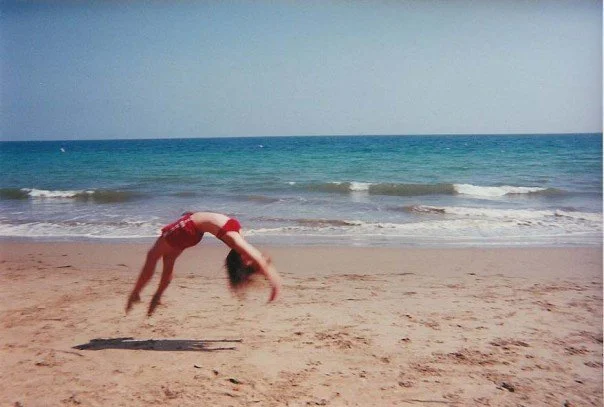
I was not a sick child. I was not chronically fatigued or bloated or struggling. I was an athlete — from the time I could walk, essentially.
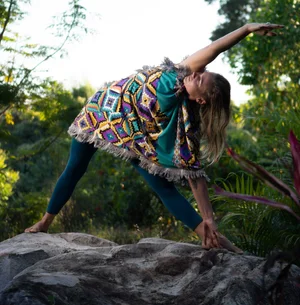
Competitive gymnastics from age five to fifteen. Swim team through high school. Springboard diving at UCSD. Then triathlons — half-Ironman distance. Cycling. Yoga. Swimming through my twenties and into my early thirties.
My body was capable, strong, and responsive. I knew it intimately — the way only someone who has trained it daily for decades can know a body. I knew what it felt like when something was wrong.
And for years — despite the Lyme, despite what I now understand was a slowly accumulating parasitic burden — my athletic body compensated. It adapted. It kept performing. The liver flukes establishing in my bile ducts, the intestinal flukes attaching to my gut wall, the tapeworm settling in — all of it happening beneath the threshold of obvious symptoms, in a body strong enough to absorb the burden without collapsing under it.
This is important to understand: parasites don't always announce themselves. In a fit, well-nourished, highly functional body, they can live for decades, hiding in nests made out of biofilm, candida, and heavy metals — quietly depleting, quietly inflaming, quietly reshaping your biology — while you go on running triathlons and thinking you're fine.
Until something breaks the compensation and exposes whats hiding behind the heavy metal barrier.
For me, that something was becoming a mother.
When Everything Changed
At thirty-two, I had an emergency c-section.
And then I lost my daughter.
I will not dwell long here because grief of that magnitude doesn't belong compressed into a paragraph. But I will say that what followed — the physical trauma of emergency surgery, the hormonal collapse of postpartum loss, the immune dysregulation of profound grief — began to shift something in my body that had previously held.
I recovered. I rebuilt. I kept going — because that is what we do.
But the body remembered.
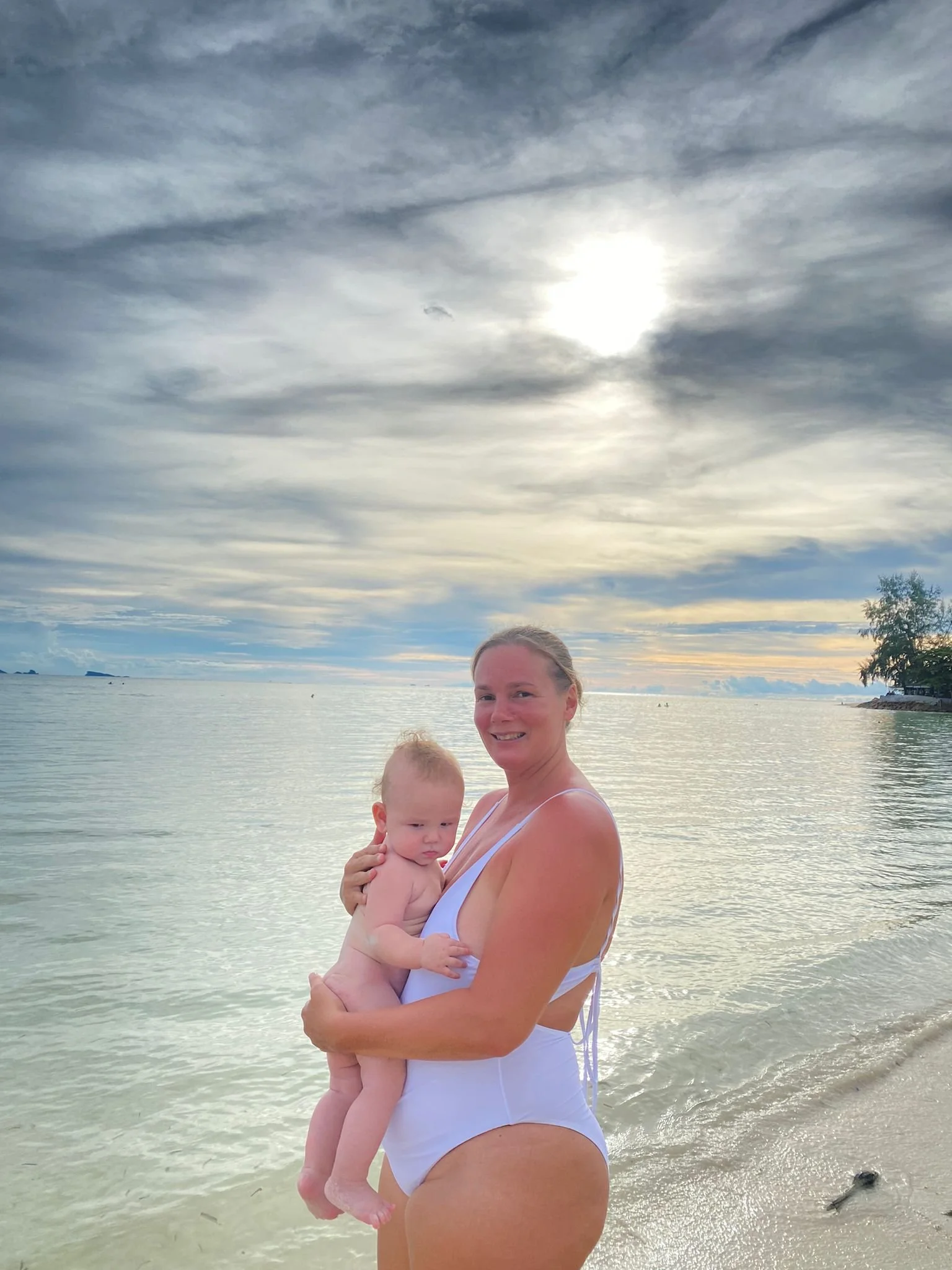
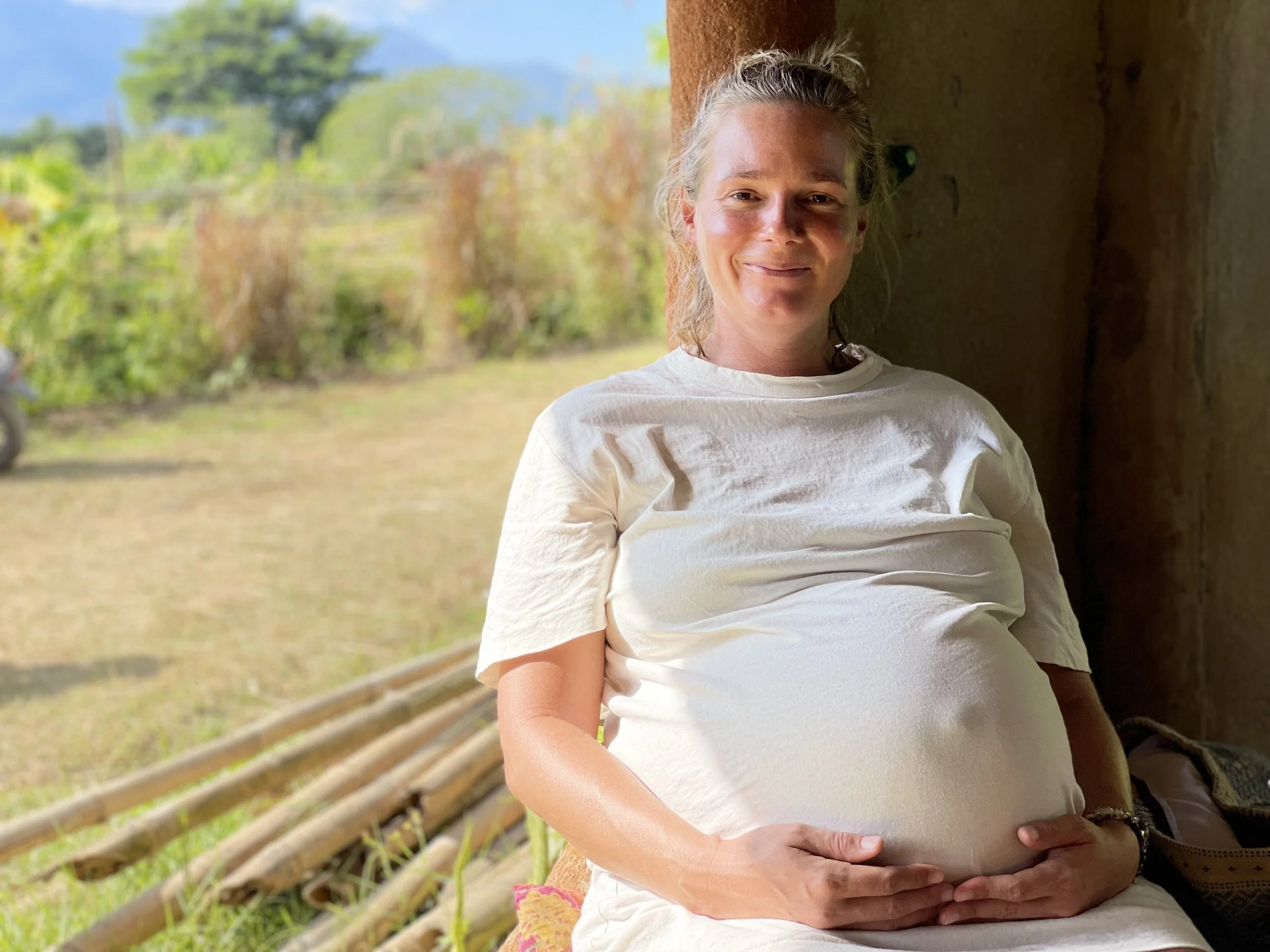
At thirty-six I gave birth again. And this time — in the months that followed — the compensation finally broke.
The symptoms that had been silently accumulating for decades suddenly had nowhere left to hide. Weight appeared that I could not explain and could not shift — fifty pounds on a body that had completed half-Ironmans, that had trained daily for thirty years. Fatigue unlike anything athletic overtraining had ever produced. Joint pain. Pelvic pain. Irregular periods. Insomnia. Sleep that stopped restoring me no matter how many hours I got.
And then, about two years ago — the abdominal pain began.
Burning. Constant. Radiating from my liver across my transverse abdomen all the way to my pancreas. The kind of pain that makes you catch your breath when you move wrong, that is present when you wake and present when you finally fall asleep.
For eighteen months, that pain did not leave.
What the Doctors Said
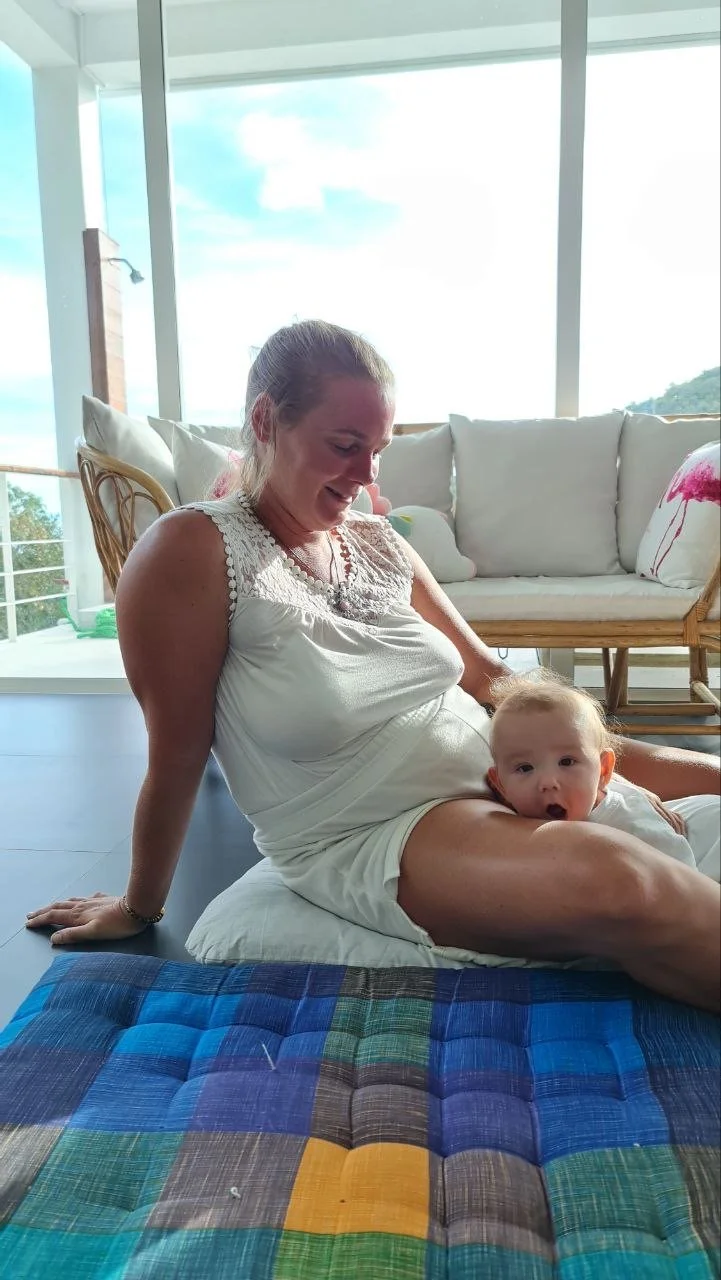
I went to doctors. Of course I did.
I described the symptoms. The weight. The distension. The pain. The history. The farm. The Lyme. The postpartum acceleration.
One doctor told me my belly was swollen because of gas.
I had two full abdominal ultrasounds. A transvaginal ultrasound. All performed six months apart, reviewed by different practitioners.
All clear.
Nothing there, they said.
I want to sit with that for a moment — because I think it's important.
Decades of parasitic burden establishing itself in my bile ducts, my intestinal walls, my fascia, my pelvic tissue. Three separate imaging studies. Nothing found.
Not because nothing was there. Because ultrasound cannot see what was there. Liver flukes in bile ducts. Granuloma formations in soft tissue. Schistosome eggs embedded in fascial layers and pelvic walls. These don't appear on standard imaging. They never did. They never will.
The tests came back clear. The doctors felt vindicated.
I went home with nothing.
One infectious disease specialist — the one I had finally managed to access after months of trying — not only dismissed my clinical picture entirely but canceled me as a patient when I pushed back. That dismissal cost me more than a year. Not just of treatment, but of hope. Of momentum. Of the will to keep searching.
I want to be fair to the medical system. I understand its limitations. But when a former elite athlete — a woman who has trained her body her entire life and knows it — comes to you describing specific, progressive, multi-system collapse following postpartum stress, with a Lyme history and a childhood on a farm in tick country, parasites should be on the differential diagnosis.
They were not. Not once. Not by anyone.
Eight Years of Everything — And Still Not Free
In parallel with the medical search I was doing everything else I could find.
I mean everything.
Herbal antiparasitics — wormwood, black walnut, clove, artemisia, myrrh, neem, mimosa pudica, garlic, pure pine gum spirits. Years of them, rotated, cycled, combined with precision. I became fluent in the language of plant medicine. I sat with indigenous healers in Costa Rica, Thailand, and Guatemala. I fasted. I juiced. I completed over forty Andreas Moritz liver flushes. I added red light therapy, ozone therapy, glutathione IVs, glutathione suppositories. Biohacking protocols. Sound healing. Frequency medicine. Nervous system regulation. Everything my training in cognitive neuroscience, health coaching, and holistic medicine could reach for.
And things shifted — I won't say they didn't. My body responded. Windows of feeling clearer, lighter, less burdened.
But I could never quite get free.
The pain would return. The fatigue would crash back. The weight held. Something was still there — something established, something deep, something that eight years of herbs and intention and the most committed healing work of my life could move but not clear.
I didn't understand why.
Not until bioresonance showed me what I was actually dealing with.
The Scan That Told the Truth
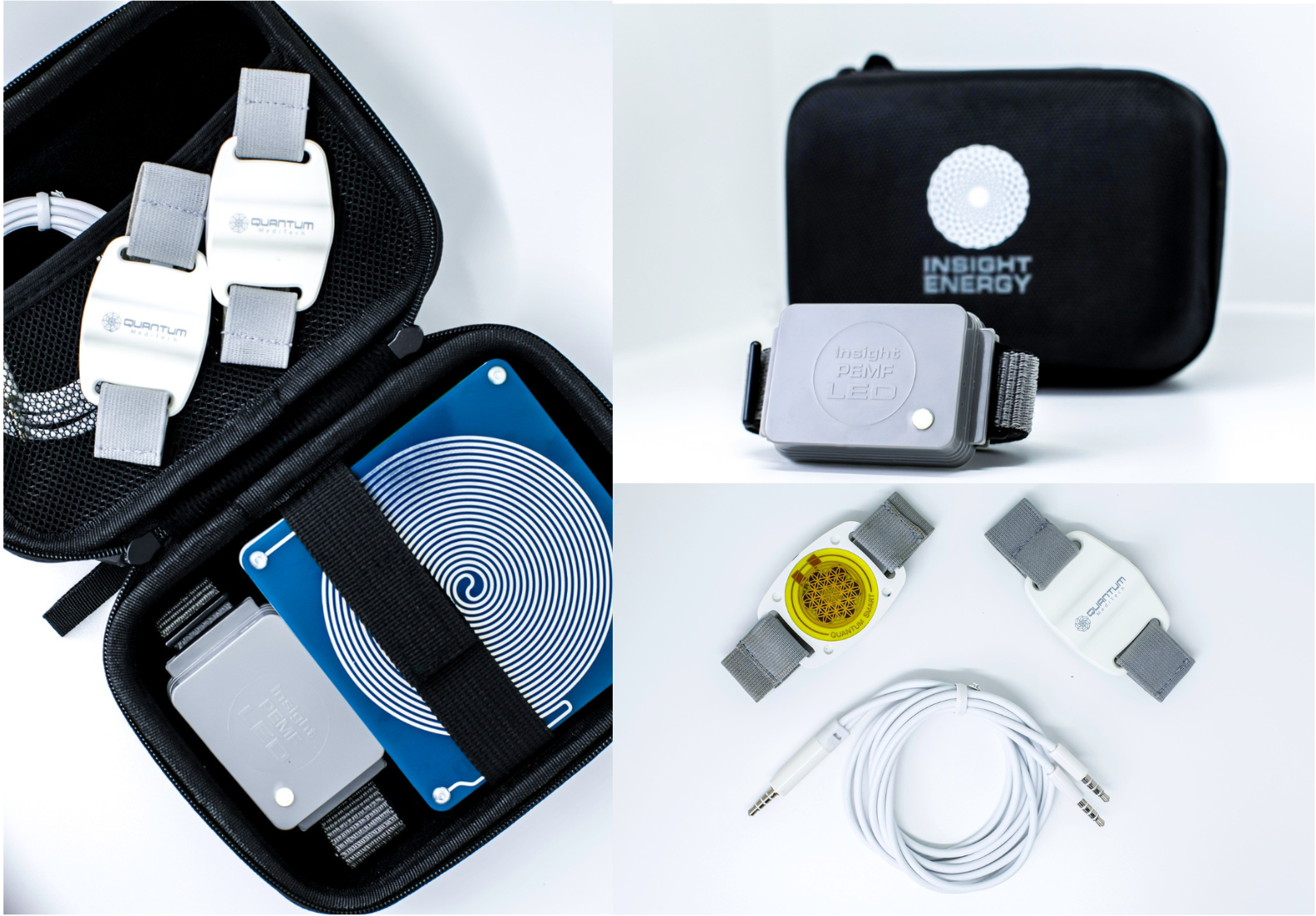
I discovered bioresonance during the Covid lockdowns in Thailand — one of those strange gifts that emerge from periods of forced stillness.
Bioresonance technology reads the body's electromagnetic frequency signatures — the unique resonant patterns that every organism, every pathogen, every tissue emits. It doesn't diagnose in the conventional sense. It listens. It picks up what the body is broadcasting at the frequency level — below the threshold of standard symptoms, below what blood tests detect, far below what imaging can see.
My first scan was a revelation.
There they were. Fasciola hepatica. Liver flukes. Intestinal flukes. Tapeworm. Schistosoma.
Not as a recent acute infection. As a chronic, established, decades-long burden — the kind that had been quietly accumulating since childhood. Since the farm. Since the Lyme opened the door and never fully closed it.
I felt two things simultaneously: grief and relief.
Grief because — twenty years. Twenty years of this living inside me, driving inflammation, stealing nutrients, disrupting hormones, exhausting my immune system, slowly dismantling the athletic terrain I had spent a lifetime building. Twenty years of doctors who never looked.
Relief because — finally. Finally something was seeing what my body had been broadcasting all along. The bioresonance wasn't gaslit by my symptoms. It didn't tell me it was stress. It didn't send me home with nothing.
It showed me the truth in frequencies.
And it became the thread I held onto — through eight years of protocols, through dismissals, through the year-long search for medicines I couldn't find anywhere — because it kept confirming what I knew: something is here. Your body is telling the truth.
What Parasites Actually Do to a Body
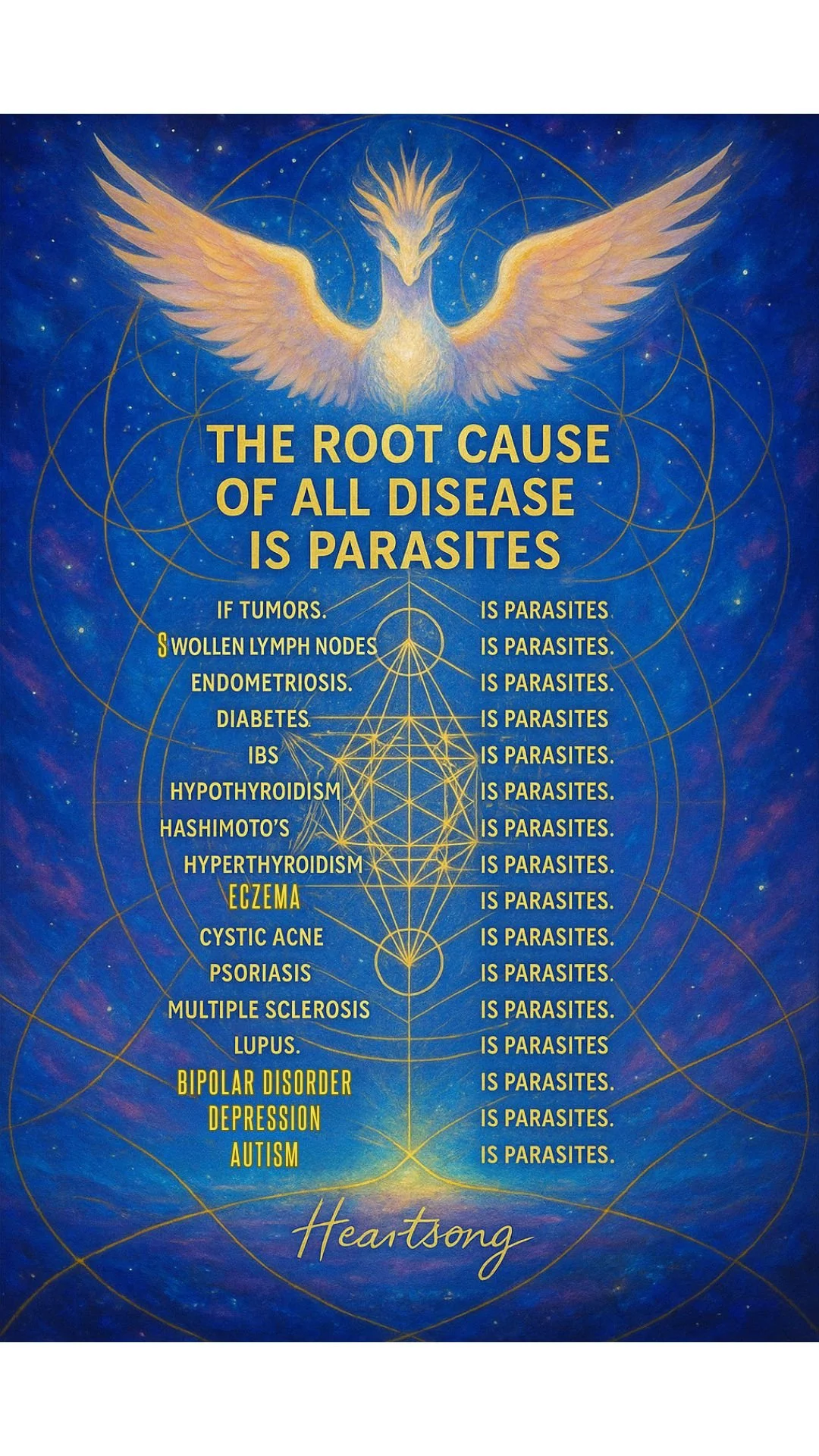
Here is what I want you to understand — what I wish someone had told me twenty years ago:
Parasites are not a fringe concern. They are not something that only happens in developing countries or to people who aren't clean enough. They are extraordinarily common, extraordinarily underdiagnosed, and extraordinarily consequential for human health.
Liver flukes — Fasciola hepatica — establish in the bile ducts and stay there for years. Decades. They disrupt bile flow, impair fat and fat-soluble vitamin absorption, generate chronic hepatic inflammation, and create the kind of systemic terrain where nothing else in the body can function optimally. They are associated with elevated triglycerides, hormonal disruption, immune dysregulation, and profound fatigue.
Intestinal flukes attach to the gut wall and generate chronic inflammation, dysbiosis, and nutritional depletion. Tapeworm competes directly for B12, folate, and fats — the very nutrients your brain, your hormones, and your connective tissue depend on.
Schistosoma deposits eggs in tissue — in pelvic walls, in fascial layers, in bladder mucosa — where they trigger granulomatous inflammation that progressively damages connective tissue from the inside.
And the weight? The stubborn, inexplicable fifty pounds that appeared on a body that had completed half-Ironmans and trained daily for thirty years?
Parasites alter metabolism. They generate chronic low-grade inflammation that drives insulin resistance. They impair thyroid function indirectly through nutritional depletion and toxic burden. They create a body that is fighting so hard just to survive that fat storage becomes a biological imperative.
It wasn't my fitness level. It wasn't my diet. It wasn't my willpower. It wasn't gas.
It was twenty years of uninvited guests — and a postpartum body that had finally run out of capacity to compensate for them.
The Medicine I Couldn't Find
Once I understood what I was dealing with, I knew what was needed. Triclabendazole for the liver flukes. Praziquantel for the intestinal flukes, tapeworm, and schistosoma. Specific, targeted, evidence-based pharmaceuticals — the standard of care in parasitology literature.
For over a year I could not find them.
Pharmacies didn't carry them. Doctors wouldn't prescribe them — when they were willing to see me at all. The infectious disease specialist who canceled me as a patient was the closest I got to conventional help, and he sent me away with nothing.
So I kept going with herbs. More protocols. More natural approaches that moved the needle but couldn't finish the job. Knowing what was there, understanding exactly what was needed, and being unable to access it.
The cruelty of that — of having finally identified a root cause after eight years of searching and then being unable to treat it — is not something I have adequate words for.
Until now.
The Threshold I'm Standing On
The medicines arrived recently. After more than a year of searching — after being dismissed, after hitting wall after wall — they are finally here. from a private international pharmacy
Yesterday I took triclabendazole for the first time.
I want to tell you what happened, because it is the kind of thing that dissolves any remaining doubt about what has been living inside you.
Within hours, I felt something shift in my upper abdomen. The pain that has been with me for eighteen months — burning, constant, radiating from my liver across my transverse abdomen all the way to my pancreas — began to change. Not dramatically at first. But noticeably. The burning sensation lightened. Something that had felt hot and inflamed for a year and a half began to cool. The swelling, the pressure, the relentless weight of it — began, incrementally, to reduce.
I had forgotten what it felt like not to have that pain.
Yesterday I got a glimpse.
That is what happens when the right medicine finally meets the right pathogen — in a body that has been waiting, that has known all along what was needed, that simply needed to finally receive it.
Tomorrow I take praziquantel — targeting the giant intestinal flukes, the beef and pork tapeworm, and the schistosoma that bioresonance has been flagging for years. Another layer of what has been living inside me, finally being addressed.
I won't pretend this process is comfortable. Die-off is real. The body reacts when pathogens that have been resident for twenty years begin to clear. There is inflammation, fatigue, the immune system suddenly processing what it has been tolerating for so long.
But underneath all of it — beneath the die-off and the reaction and the intensity — something is already freer.
Like a frequency that has been distorted for so long you forgot what the clean signal was supposed to sound like.
I am beginning to remember.
What Bioresonance Made Possible
I want to return here — to the technology that saw what nothing else could see.
Bioresonance didn't just identify the parasites. It tracked them over time. It showed me which systems were most burdened, how the body was compensating, what the terrain looked like at the frequency level. It guided eight years of natural protocols that, while they couldn't fully clear the infection alone, kept my body functional and gave my immune system enough support to survive a genuinely significant parasitic burden.
It validated my experience when medicine dismissed it.
In a landscape that repeatedly told me my symptoms weren't real — that sent me home after three imaging studies found nothing, because they were looking with the wrong tools — bioresonance said: no. Something is here. Your body is telling the truth.
For someone who had been dismissed, canceled, and sent home with nothing for years — that was not a small thing. It was the thread that kept me searching when I might otherwise have stopped.
If This Is Your Story Too
If you are reading this and something in you is recognizing itself — the unexplained symptoms, the weight that won't shift, the fatigue that doesn't make sense, the tests that come back normal, the doctors who haven't found anything, the feeling that something deeper is going on —
Your body is not lying to you.
Chronic parasitic infection is real, it is common, and it is one of the most underdiagnosed root causes of chronic illness in the world. It doesn't announce itself on standard blood panels. It doesn't appear on routine ultrasounds. It hides in tissue, in bile ducts, in fascia — in the places conventional medicine doesn't think to look.
But it broadcasts at the frequency level.
And that is exactly where bioresonance looks.
Nik Heartsong is a Quantum Bioresonance and Holistic Detox Therapist and founder of Winged Heart Healing. She offers remote bioresonance sessions worldwide via Zoom. If you're ready to find out what your body has been trying to tell you, book a session here.