Depression is not a serotonin deficiency. It is a terrain problem. And terrain problems have terrain solutions.
You have done the therapy. You have tried the antidepressants — or decided against them. You have built the morning routine, done the breathwork, addressed the trauma.
And yet the depression is still there. The flatness. The heaviness. The disconnection from joy that no amount of mindset work seems to fully lift.
What if the missing piece is not psychological at all?
What if something living in your gut — in your liver, in your bile ducts, in the specific neurochemical architecture of your terrain — is producing the mood disruption that conventional psychiatry has never been equipped to investigate?
This is not a fringe theory. This is emerging science. And it is one of the most consistently significant findings in my clinical bioresonance practice — the relationship between physical terrain and mental health that conventional medicine has never connected.
Here are the ten root cause interventions that actually address what is driving depression at the terrain level.
1. Address Parasites First
This is the connection almost nobody makes — and it is the most important one on this list.
Parasites steal your serotonin before your brain ever sees it.
Serotonin is synthesised from tryptophan — an essential amino acid that must come from diet. Parasitic organisms actively compete for tryptophan as a metabolic substrate, consuming it before it can be used for serotonin synthesis. In a body with significant parasitic burden, this competition can meaningfully reduce serotonin production — producing the low mood, poor sleep, and reduced stress resilience that are hallmarks of serotonin deficiency.
But the mechanism goes further. Chronic parasitic infection activates the immune system's inflammatory response, which diverts tryptophan away from serotonin production entirely — through a pathway called the kynurenine pathway that produces neuroinflammatory compounds instead of mood neurotransmitters.
You cannot supplement your way out of a parasitic infection stealing the raw materials for your mood.
No amount of 5-HTP, tryptophan supplementation, or antidepressants overrides a parasitic terrain that is continuously depleting the substrate those interventions depend on.
2. Heal Your Gut
90% of serotonin is produced in the gut — not the brain.
This is not metaphorical. The enteric nervous system — over 500 million neurons lining the gastrointestinal tract — is the primary site of serotonin synthesis in the human body. The brain receives serotonin signals from the gut via the vagus nerve. When the gut terrain is disrupted — colonised by parasites, candida, and dysbiotic bacteria — serotonin production is directly impaired at its primary site of manufacture.
SSRIs work by preventing the reuptake of whatever serotonin is being produced. They cannot address a gut terrain that is not producing adequate serotonin in the first place.
The antidepressant the gut needs is not a pharmaceutical. It is terrain clearing — systematic removal of the organisms disrupting serotonin production at its source, followed by microbiome restoration with specific probiotic strains that have documented psychobiotic activity.
The gut is your second brain. Heal it first.
3. Replete Zinc and Magnesium Daily
Two minerals. Consistently depleted. Directly responsible for the neurochemical architecture of mood.
Zinc is the essential cofactor for dopamine synthesis — the neurotransmitter responsible for motivation, reward, focus, and the feeling of being genuinely alive. Parasitic organisms are among the most zinc-avid organisms known, competing aggressively for zinc in a way that creates systemic depletion in chronically burdened hosts. Low zinc means the dopamine synthesis pathway cannot function regardless of how many dopamine-precursor supplements are taken.
Magnesium is required for GABA production — the brain's primary inhibitory neurotransmitter and the neurochemical brake that allows the nervous system to return to calm. Chronically elevated cortisol from stress and infectious burden actively depletes magnesium. Low magnesium means a nervous system that cannot adequately inhibit its own activation — producing the chronic free-floating anxiety that so frequently accompanies depression.
Your mood is only as good as your mineral status.
Zinc 30–50mg daily. Magnesium glycinate 400–600mg daily. Non-negotiable foundations before any other intervention.
4. Morning Sunlight Every Day

Sunlight within 30 minutes of waking is the single most powerful free mood intervention available — and it is consistently underestimated.
Sunlight on the eyes and skin within that morning window triggers a simultaneous cascade that no supplement replicates:
Cortisol rises — genuine morning energy from your own biology rather than caffeine. Serotonin production begins — the same serotonin that converts to melatonin at night for restorative sleep. Your circadian rhythm anchors — setting the hormonal clock that governs mood, metabolism, immune function, and cellular repair for the next 24 hours. Vitamin D synthesis begins — the master hormone that regulates over 2,000 genes and whose deficiency is almost universal in depression.
Miss this window and the body borrows energy from the adrenals all day instead.
Before screens. Before coffee. Before anything.
Ten minutes. Outside. Eyes toward the sky. Free. Every single day.
5. Grounding — Barefoot on Earth
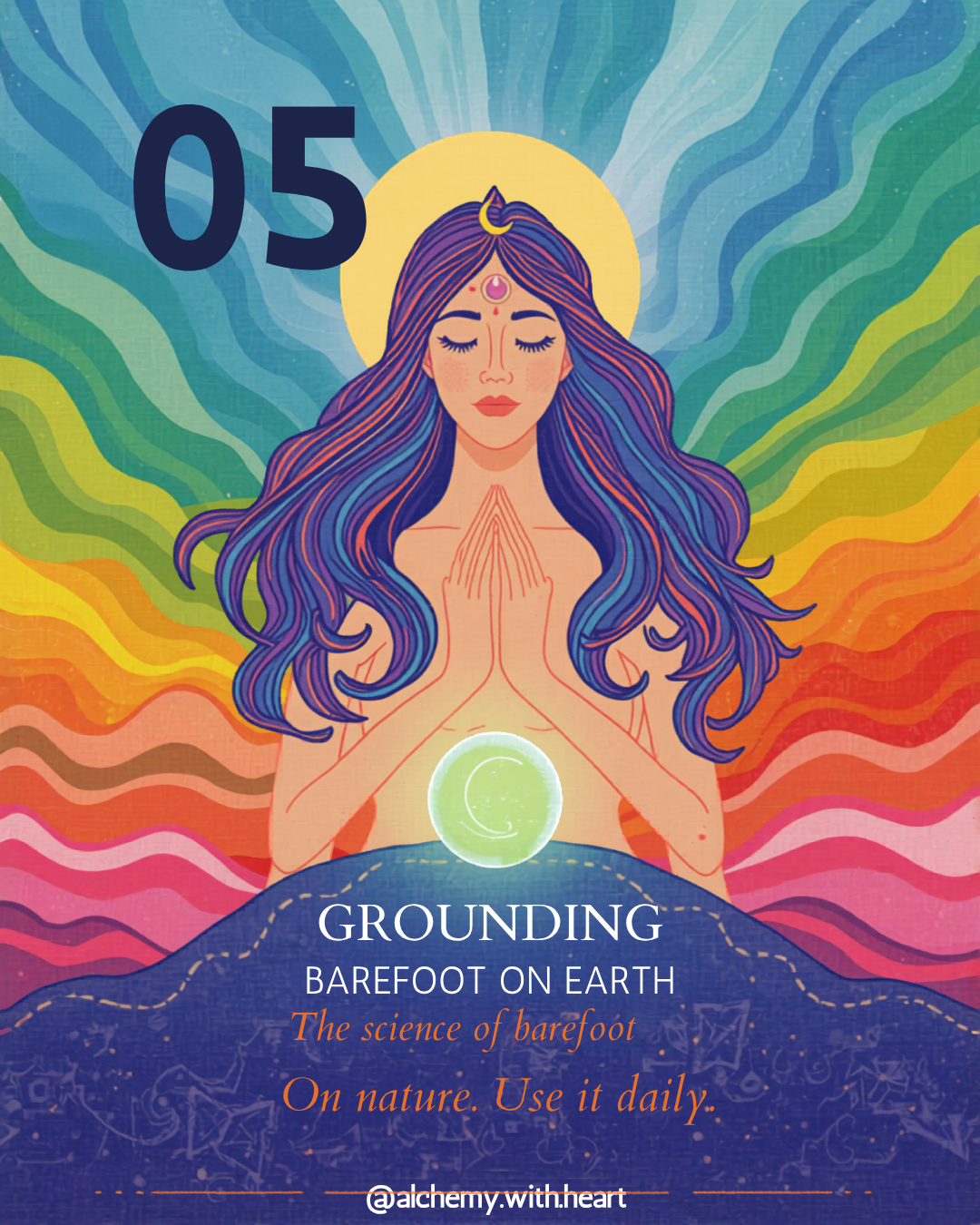
The earth carries a negative electrical charge. Walking barefoot on grass, soil, sand, or any natural surface transfers free electrons directly into the body — producing measurable, documented, physiological effects on inflammation, cortisol rhythm, and mood.
Research on earthing and grounding has demonstrated reduction in inflammatory markers, normalisation of the cortisol diurnal rhythm, improvement in sleep quality, and reduction in subjective stress and anxiety. The mechanism is direct — free electrons from the earth's surface neutralise the positively charged free radicals driving chronic inflammation and HPA axis dysregulation.
In a body with significant parasitic burden driving continuous immune inflammation — grounding is one of the simplest and most consistently accessible anti-inflammatory interventions available.
The earth is medicine. Use it daily.
Ten minutes barefoot on any natural surface. Every morning if possible. Before the day begins.
6. Move Your Lymph Daily
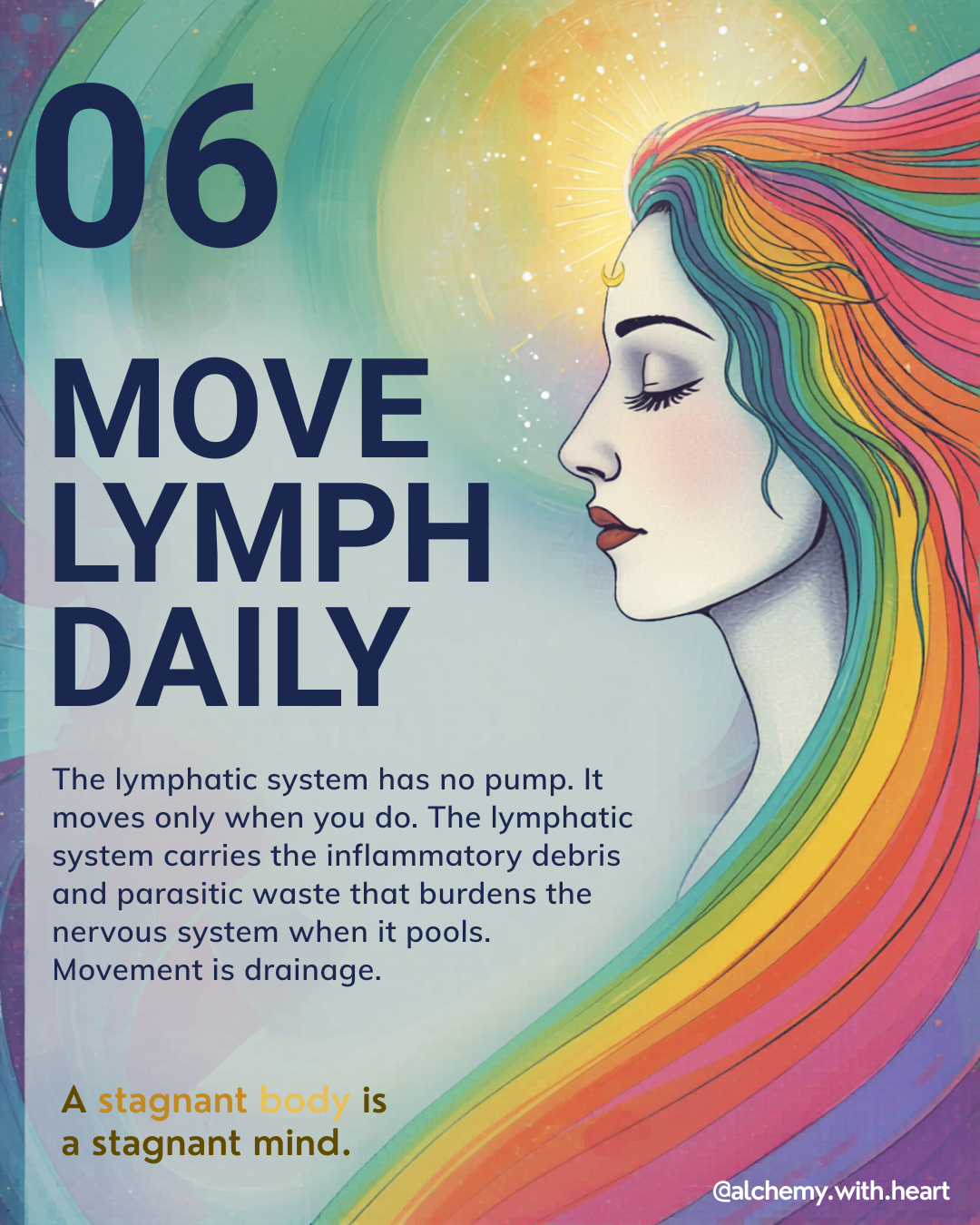
The lymphatic system is the body's primary drainage system for inflammatory debris, parasitic metabolic waste, and immune system byproducts. And it has no pump.
Unlike the cardiovascular system, the lymphatic system moves only when the body moves. Sedentary living means stagnant lymph — and stagnant lymph means the inflammatory compounds driving neuroinflammation and mood disruption are pooling in the tissues rather than being cleared.
Walking, rebounding on a mini trampoline, dancing, swimming, yoga — any movement that engages the full body activates lymphatic flow. Rebounding is particularly effective because the vertical acceleration and deceleration creates a pumping action through the lymphatic vessels that no other exercise replicates.
A stagnant body is a stagnant mind.
The people who feel emotionally better after exercise are not imagining it. They are clearing the neuroinflammatory burden that was producing the mood disruption. Every day. Non-negotiable.
7. Cleanse the Liver
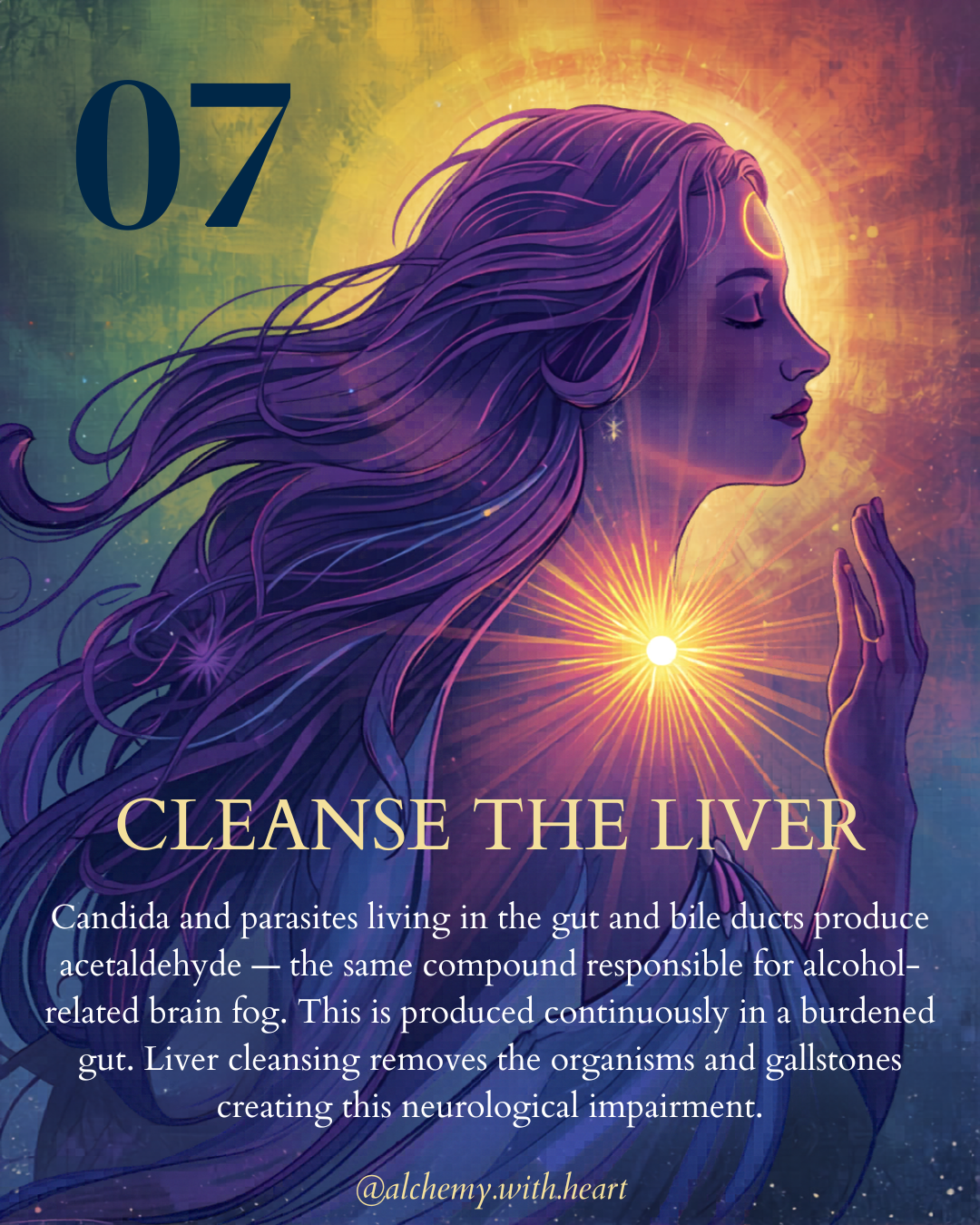
This is the connection that changes everything for treatment-resistant depression — and it is almost never made in conventional or even integrative psychiatry.
Candida and parasites living in the gut and bile ducts produce acetaldehyde as a primary metabolic waste product. Acetaldehyde is the same compound responsible for alcohol-induced cognitive impairment — the compound that makes people feel foggy, slow, depressed, and anxious the morning after drinking.
In a body with chronic candida overgrowth and parasitic hepatic burden, acetaldehyde is produced continuously — not from alcohol consumption but from the metabolic activity of organisms colonising the gut and liver. This creates a state of chronic, low-grade neurological impairment chemically identical to chronic alcohol exposure, produced from inside the body.
The liver is also the primary site of neurotransmitter precursor processing and the organ responsible for clearing the inflammatory compounds that drive neuroinflammation. A burdened liver — congested with gallstones, parasitic debris, and toxic accumulation — cannot perform this neurochemical processing function regardless of how clean the diet becomes.
Regular liver flushing using the Andreas Moritz protocol, combined with systematic antiparasitic terrain clearing, is one of the most consistently significant mood-lifting interventions in my clinical practice — precisely because it addresses the acetaldehyde production and hepatic neurotransmitter processing failure that no antidepressant was ever designed to reach.
The liver is the root of your mood architecture.
8. Eliminate Sugar
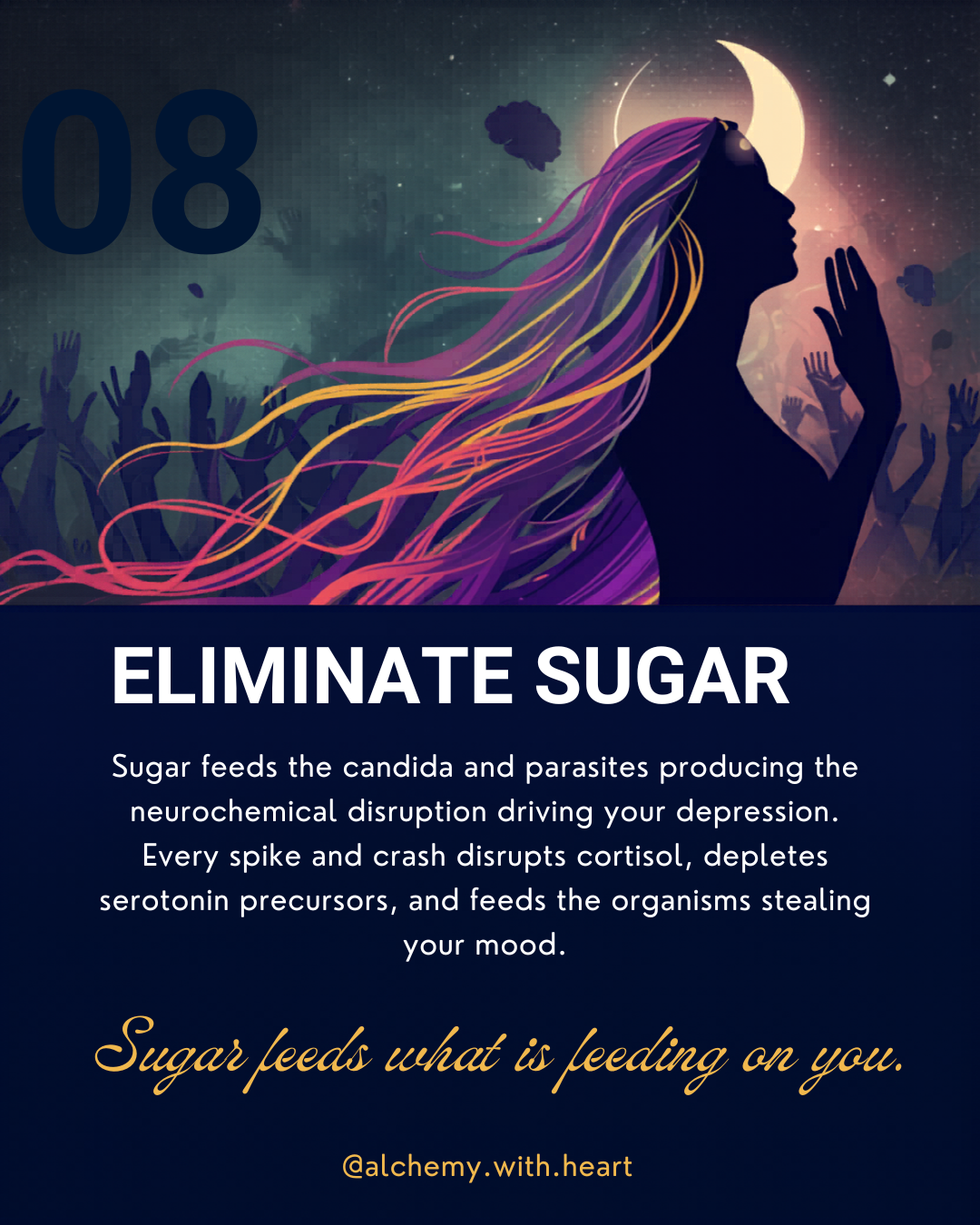
Sugar is not simply an unhealthy food. In the context of a terrain with parasitic and candida burden, it is the fuel that sustains the organisms producing the neurochemical disruption driving depression.
Candida feeds exclusively on simple sugars. Every high-sugar meal is a direct feeding of the yeast producing acetaldehyde in the gut. Every glucose spike followed by a crash depletes serotonin precursors, disrupts cortisol rhythm, and feeds the organisms competing for the tryptophan and zinc required for mood neurotransmitter production.
This is not a willpower problem. This is terrain management.
When the organisms driving the sugar cravings are cleared from the gut terrain — the cravings disappear not through discipline but because the biological driver of the cravings is no longer present. This is one of the most consistent and most clinically satisfying observations in my practice.
Sugar feeds what is feeding on you.
9. Regulate Your Nervous System
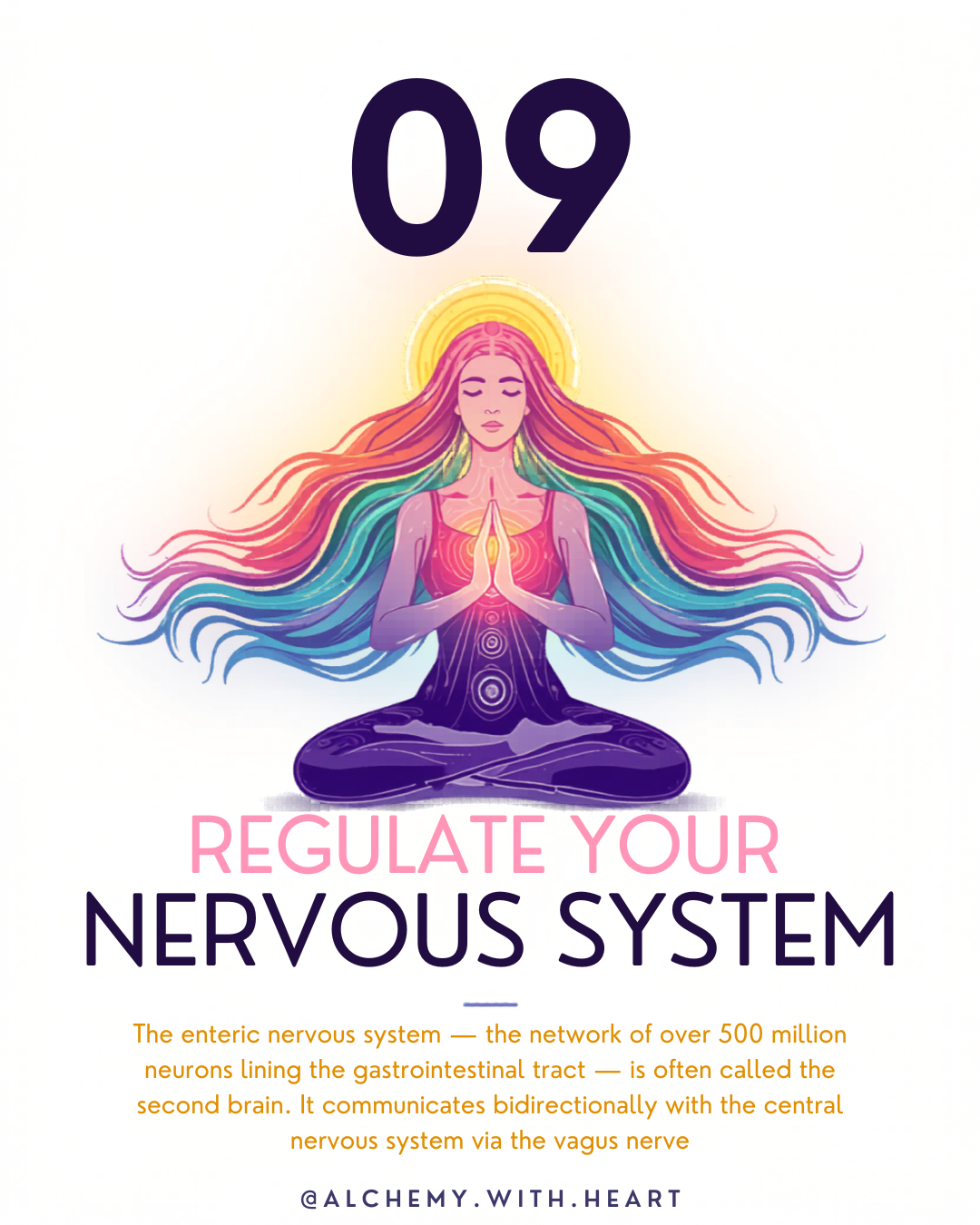
The nervous system locked in chronic sympathetic dominance — fight or flight — cannot produce the serotonin and GABA required for mood stability.
The HPA axis continuously activated by chronic infection, unresolved trauma, and accumulated inflammatory burden maintains a physiological state that is incompatible with the neurotransmitter production that genuine emotional wellbeing requires. Adaptogens and supplements cannot override a nervous system in chronic threat response — because the nervous system's threat response is actively suppressing the very neurotransmitter systems the supplements are trying to support.
The daily practices that shift this:
Breathwork — extended exhalation (4 counts in, 8 counts out) directly activates the vagus nerve and shifts the autonomic nervous system toward parasympathetic dominance within minutes.
Cold water on the face and neck — triggers the diving reflex, a powerful parasympathetic activation that immediately slows heart rate and activates the vagal tone that supports emotional regulation.
Humming and singing — activates the laryngeal branch of the vagus nerve, directly stimulating the parasympathetic system through sound.
Stillness and silence — 10–20 minutes of genuine stillness daily gives the nervous system the recovery time that continuous stimulation never allows.
You cannot heal in a nervous system at war.
These are not optional extras. They are the prerequisite for every other intervention to work.
10. Find the Root Cause
Depression that does not respond to treatment is not a psychology problem that requires more psychological intervention. It is a terrain problem — specific, addressable, identifiable.
The specific organisms depleting your serotonin. The specific liver burden producing the acetaldehyde clouding your cognition. The specific zinc and mineral deficiencies impairing your dopamine synthesis. The specific inflammatory pattern driving neuroinflammation. The specific nervous system dysregulation maintaining the chronic threat response.
All of it is findable. All of it is clearable. None of it requires living with depression as a permanent condition.
A quantum bioresonance scan reads the electromagnetic terrain of the body — identifying the specific parasitic load, the hepatic burden, the neurotransmitter deficiencies, and the nervous system patterns that standard psychiatric assessment never investigates. It maps the terrain. And the terrain is what determines whether the brain can produce the neurochemical environment that genuine emotional wellbeing requires.
Depression is not a diagnosis. It is a communication.
The body is communicating about specific terrain disruptions with extraordinary precision. When those disruptions are identified and cleared — the neurochemical environment shifts. Not because something was suppressed. Because the root cause was finally removed.
The Bottom Line
Depression is not a serotonin deficiency requiring a serotonin reuptake inhibitor.
It is a terrain problem — driven by the specific combination of parasitic burden, gut dysbiosis, liver congestion, mineral depletion, nervous system dysregulation, and inflammatory neurochemical disruption that standard psychiatric assessment was never designed to find.
Address the terrain. The mood follows.
If you are navigating treatment-resistant depression or anxiety — book a Quantum Bioresonance Session and let's map your terrain together.
Book a Quantum Bioresonance Session — $150 Remote worldwide via Zoom · wingedhearthealing.com/book-a-session Free 30-min Discovery Call: calendly.com/heartsongvibes/30min